
For more than 44 years at CIREC we have worked to fulfil our mission: to heal our users and their families physically, emotionally and spiritually. Our journey has led us to embed the concept of holistic healing as the distinctive value in every service we offer.
At CIREC we understand pain — not only from understanding what each user who comes to us seeking recovery feels, but also from knowing the pain that comes from their surroundings. More than 39,000 services provided over the course of our experience, rehabilitating an average of 19,300 users a year, have taught us that with every life we heal we can heal other pain too.
According to World Health Organization (WHO) figures, more than 300 million people suffer from depression, one of the leading causes of work disability, and 85% of the global population are not happy at work. In addition, 650,000 workplace accidents were reported in Colombia during 2019 and an average of 9,000 occupational diseases were diagnosed. This is a reality that feeds into the pain organisations have to deal with day after day: depression and lack of motivation at work, no culture of self-care, dissatisfaction, workplace accidents and ineffective rehabilitation.
More than 300 million people suffer from depression, one of the leading causes of work disability, and 85% of the global population are not happy at work. In addition, 650,000 workplace accidents were reported in Colombia during 2019 and an average of 9,000 occupational diseases were diagnosed.
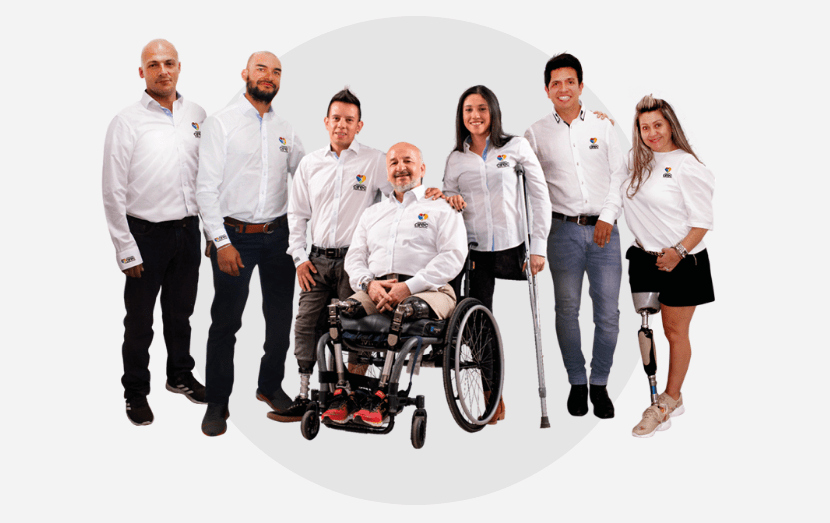
That is why, on the premise of healing in order to heal others, we have developed our Corporate Healing offering — an effective solution led by users with physical disabilities who, during their time at our institution, came to recognise the capacity of human beings in the face of adversity, developed their skills and showed us that their experiences can be the right formula for easing the pain of organisations, while at the same time continuing to heal and to have a positive impact on them through employment inclusion and raising awareness of disability among the general population.
Thanks to the journey of resilience these people have been through, and to the talent they have developed by discovering their musical, artistic or sporting abilities, they now give experiential talks about their life stories, run activities to restore the spirit and hold reflection sessions with organisations' staff, with the aim of motivating them to awaken their potential, value life, overcome personal and professional barriers and transform the way they see things so they become agents of change and build a culture of self-care — an innovative form of engagement that helps heal lives.